New York DEC confirms first case of Chronic Wasting Disease in wild Whitetail Deer since 2005
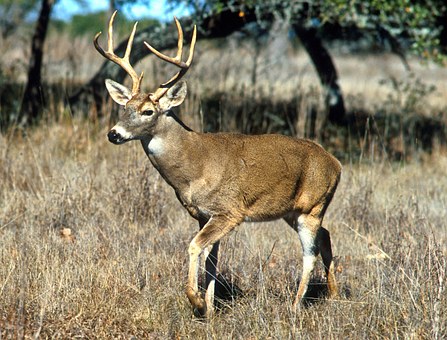
For the first time since 2005, New York State DEC has confirmed that a wild Whitetail Deer has tested positive for Chronic Wasting Disease (CWD).
Biologists say the deer in question was harvested recently in Livingston County, which is in the Western part of the state.
The positive sample was from an adult female white-tailed deer tested as part of DEC’s statewide annual wild deer surveillance program.
The sample tissue was tested and retested at the New York State Veterinary Diagnostic Laboratory at Cornell University, with additional testing now underway by the United States Department of Agriculture’s National Veterinary Services Laboratories.
This discovery will trigger implementation of New York’s CWD Response Plan (PDF) developed jointly by DEC and the New York State Department of Agriculture and Markets (AGM).
The plan outlines the steps both agencies will take to determine prevalence of the disease on the landscape and additional sampling and containment actions DEC intends to implement.
In light of ongoing and upcoming deer hunting seasons, New York State will first rely on hunter-obtained samples to determine the extent of the outbreak and prevalence of CWD within wild deer in the area.
Results from initial sampling will inform DEC’s disease management and containment efforts.
According to the DEC, CWD is an always fatal transmissible disease that affects the brain and central nervous system of deer, moose, and elk.
DEC began CWD monitoring efforts in 2002 and by 2005, CWD was confirmed in both captive and wild deer in Oneida County – the first incidents of the disease in New York State.
In 2024, CWD was confirmed in a captive red deer herd in southern Herkimer County.
Since 2002, DEC has tested over 70,000 wild deer statewide with no additional cases being discovered.
There emphasizes how there is no evidence that CWD is linked to disease in humans, domestic dogs or cats, or domestic livestock other than deer, moose and elk.
However, the Center for Disease Control (CDC) recommends not consuming the venison from any deer known to have CWD.
Visit the CDC website for additional details on CWD.
To protect domestic animals from any disease, keep them from scavenging or coming into contact with sick or dead wildlife and report suspected exposures to your veterinarian.
NYS DEC image.
